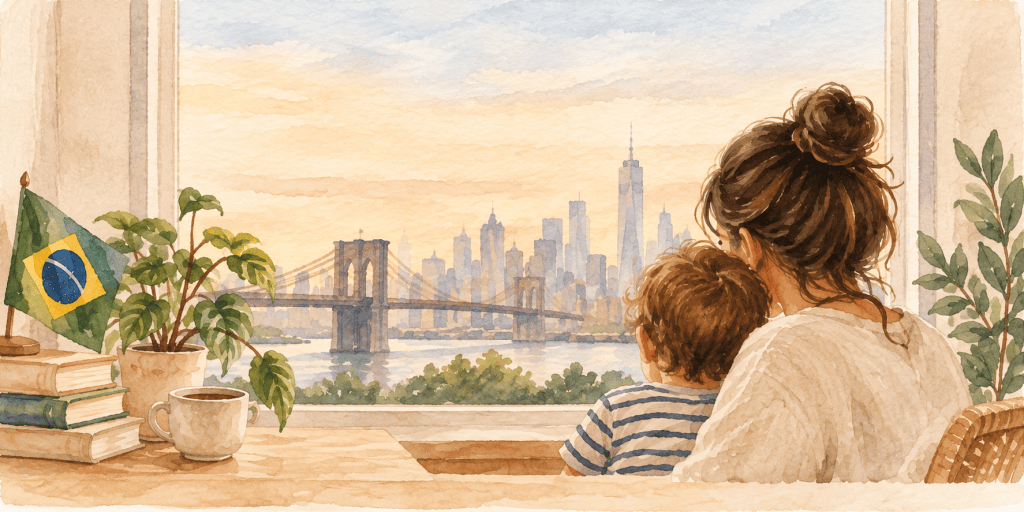
Raising my child in the United States has made me think a lot about what it means to pass on my Brazilian culture.
Of course, language is a huge part of it. I speak Portuguese with my son and hope it will always be an important connection between him, our family, and Brazil. But I’ve also realized that culture is passed down through so many other little things, like the food we eat, the music playing in the background, the products we use, and the traditions we create at home.
I don’t try to make every day a lesson about Brazil. Instead, I like finding small, natural ways to make Brazilian culture simply part of our everyday life.
Here are five of them.
1. Brazilian food is always on the table
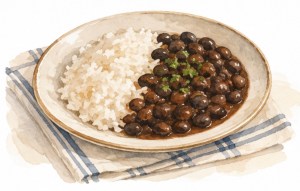
If there’s one Brazilian staple that is almost always in our house, it’s beans.
We eat them several times a week (often almost every day) with rice and whatever else we’re having. It’s such a simple meal, but it’s also one of those foods that immediately reminds me of home.
And, by the way, you don’t need a pressure cooker to make Brazilian beans! I soak mine in water overnight before cooking them, which makes the process much easier.
Beyond arroz e feijão, I love bringing other familiar foods into our routine: pão de queijo, farofa, brigadeiro for special occasions, and the snacks and flavors I grew up with (whenever I can source them).
Food is one of the easiest ways to keep a connection to home alive, and hopefully some of these dishes will become comfort foods for my son too!
2. Brazilian music is part of our soundtrack
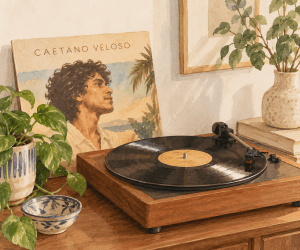
Music is probably one of my favorite ways to bring Brazilian culture into our home.
For children’s music, we listen to artists like Grupo Triii and Palavra Cantada. And yes, sometimes Galinha Pintadinha makes an appearance too, as you can’t completely escape the classics!
But I don’t want my son’s exposure to Brazilian music to stop at children’s songs.
I also play the music I genuinely enjoy listening to: Djavan, Gilberto Gil, Caetano Veloso, and many others.
I love the idea that these songs can simply exist in the background of his childhood. He might not understand their significance now, but they’ll be familiar. And maybe one day he’ll hear a certain song and immediately think of home. ❤️
3. I bring familiar Brazilian scents into our routines
This is such a small thing, but it’s one I really love.
Scents can bring back memories so quickly. There are certain Brazilian bath and body products that instantly remind me of home, so I like incorporating brands such as O Boticário and Granado into our routine.
Even something as ordinary as bath time can have a little connection to Brazil.
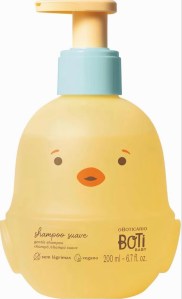
One of the products we use is the Baby Boti Shampoo from O Boticário, which has become part of our regular routine. It smells so nice and really reminds me of my childhood!
It might seem insignificant, but I think culture lives in these sensory memories too, including the smells, tastes, sounds and little details we associate with childhood.
4. Portuguese is the language of our everyday moments

I’ve written a lot about raising a bilingual child, but at home I try not to make Portuguese feel like a chore to my son, but rather a big part of the routine.
It’s vem cá, cadê?, vamos tomar banho, meu amor. It’s also the books before bed, little songs, silly expressions, and the words I naturally reach for when I’m comforting him or making him laugh.
I want him to learn Portuguese, and more importantly, I want Portuguese to feel emotionally familiar to him.
It’s the language I grew up speaking, the language much of my family speaks, and now it’s part of his childhood too.
5. We create our own little Brazilian traditions
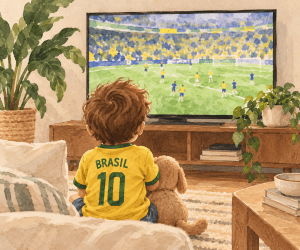
As my son gets older, I’m excited to see which Brazilian traditions become important to our family.
Some might be bigger cultural moments, like Festa Junina, watching Brazil play in the World Cup, or celebrating with brigadeiros.
Others might be much smaller: pão de queijo on a weekend morning, TV shows in Portuguese, video calls with family, or listening to Brazilian music while we’re making dinner.
I’m still figuring this part out, and I think that’s part of the beauty of raising a child between cultures.
I don’t need to recreate the exact childhood I had in Brazil. My son’s childhood will naturally be different. What I can do is make sure Brazil has a place in it.
And I hope that, over time, all these little things will add up to something much bigger: a genuine connection to where a part of his family comes from and a feeling that Brazilian culture belongs to him as well.
—-
This post contains affiliate links. As an Amazon Associate, I earn from qualifying purchases, at no extra cost to you.


Leave a comment